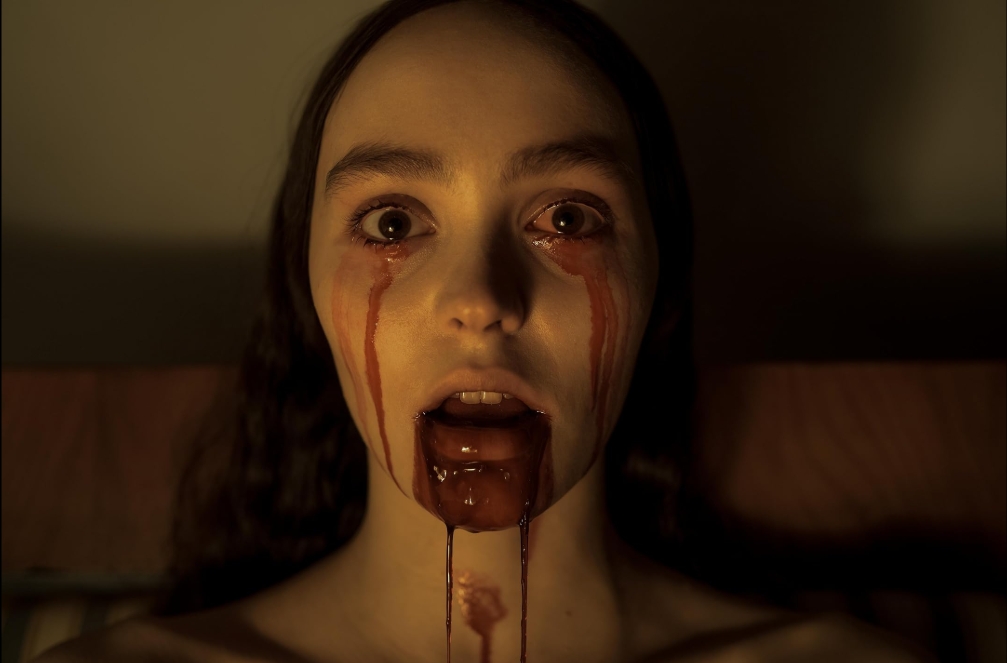
Avi & Vampires
On paper, vampires are cool as hell. They’re versatile! They have an iconic base form, yet they’re totally open to iteration. Narratively, they’re a thematic cornucopia: They represent sexuality/desire, exploitation, youth/aging, lust, capitalism, even evil itself. What a sick concept! That’s why it’s all the more surprising that I’ve never felt drawn to vampires in media. I just never really got them. To me, the execution always felt a little clunky and self-indulgent. It definitely didn’t help that my first exposure to vampires in media was Twilight when the craze was at its peak. Little contrarian that I was, I refused to engage with it, and I rolled my eyes at everything in that same vein (ha) eg Vampire Diaries, True Blood, Buffy, etc. This also meant that I never bothered to track down the classics or give vampires in media *as a concept* a fair shake.1
Cut to years later when I started watching movies with more intention. I had heard a lot about this weirdo movie called The Lighthouse and I was eager to check it out. At that point, I trusted that any A24-produced horror movie would be “interesting”/”good” at the very worst (frankly I’m still earnestly looking for an exception to this rule), and sure enough, it blew my fucking socks off. The direction, the lighting, the performances, it was all so eerie and unsettling. I thought about it for a very long time. Months later I watched The Northman on a whim. I didn’t know who directed it when I turned it on, but I very quickly realized – hey this is the lighthouse guy isn’t it? I felt very cool when I saw I was right. Just like that, Robert Eggers’ distinct style was on my radar. It feels good to claim a favorite! Choice gives me a sense of personality. Cut to last month when I saw the trailer for the Nosferatu remake with none other than Eggers at the helm. With a recently discovered passion for horror and motivated by a new movie to sink my teeth into (ha), I knew I had to see it in theaters. If anyone could sell me on vampires, it was Eggers. But first, I had to go back to the beginning.
Nosferatu (1922) | F.W. Murnau
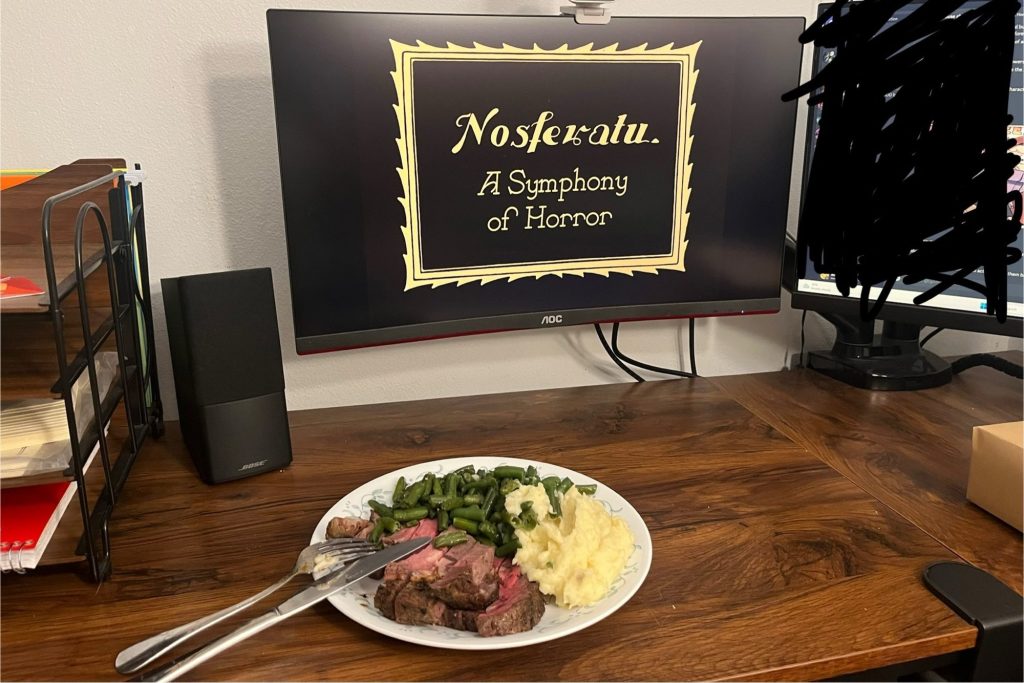
OG Nosferatu was based loosely on Brahm Stoker’s Dracula, the foundational text that started it all. As a total outsider even to the basic story, I had a blast following the narrative for the first time. It was also cool to recognize tropes in their original form that have since been reiterated countless times.2 The cinematography is timeless. When we’re in the countryside, Murnau composes setpieces in a way that emulates romantic era paintings: open, mysterious, powerful. In contrast, indoor scenes are alternatively warm and cozy (the hostel, the nurse ward) or claustrophobic and grimy (the castle). When the tension peaks, there’s a voyeuristic and sinister feeling, like we’re watching something we shouldn’t. This was my first silent film, so I was surprised by the dialogue placards (I laughed out loud when I saw them for the first time), but I came to appreciate them as a narrative device and the trimming/clarifying affect they had on the plot. This, paired with the full-bodied acting and exaggerated emotions of the silent film era, ensured that the narrative was cleanly delivered at a brisk and delightful pace.
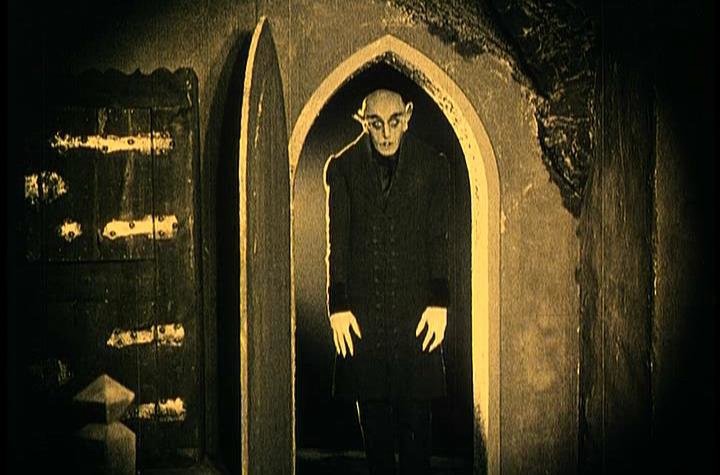
And as for our main guy? Nosferatu was genuinely really freaky. When he was revealed in that iconic doorway shot, my jaw was on the floor for how sick it was. Granted I wasn’t scared – the effects are a little too dated for that – but keep in mind this movie is one HUNDRED years old. My grandparents probably shit their pants when they saw this creepy mf for the first time. I loved how the ambiguity of his abilities really elevated the sense of dread.
A list of his abilities:
- hypnotize people
- telekinesis + telepathy
- basically immortal
- control over rats + and plague
- he’s really strong
- phase through solid objects (?)
- control the wind (??)
- he can turn into a dog (???)
This is a vampire that I can get behind: An embodiment of evil that shows up and you’re basically fucked no matter what since the story can just write in new ways for him to ruin your day. Even if you somehow manage to take him out, it isn’t a victory – it’s a sacrifice. Very cool. I give OG Nosferatu a solid 4/5.
Nosferatu (2024) | Robert Eggers
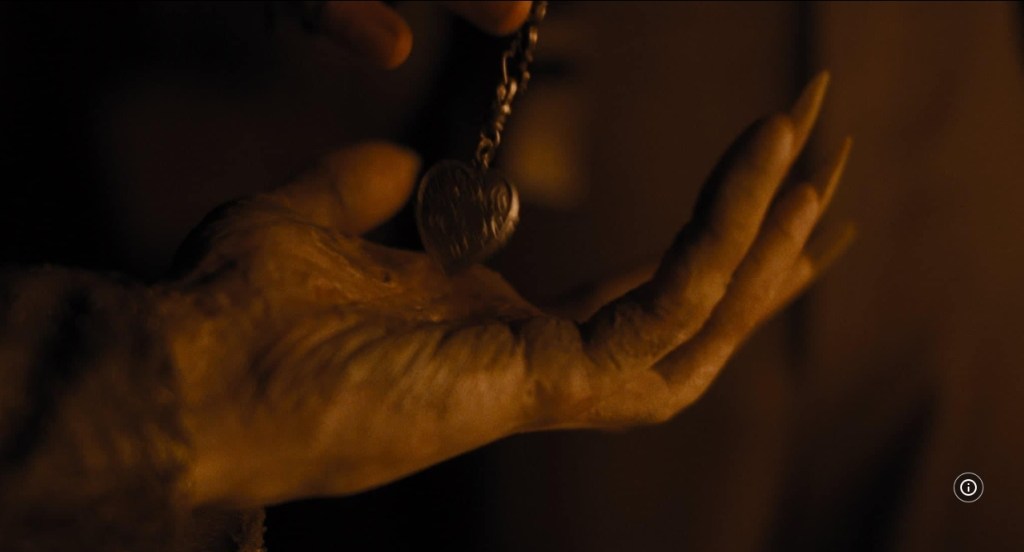
Let’s start with the good. In terms of cinematography, Eggers did an incredible job not only maintaining but elevating the feeling of the original. Claustrophobic swivel shots in private conversations, super close shots of single tears rolling down porcelain faces, a sweeping overhead shot of dracula’s shadowy hand consuming the skyline – this movie looked absolutely wicked. In the first film, Murnau uses yellow tint to depict well-lit scenes and green to depict darker scenes. I saw this as a limitation of the technology, but Eggers used it as inspiration. There were several scenes where the only source of light was a flickering yellow candelabra, which made for some incredibly spooky shadows and shapes. Meanwhile, a lot of the dark scenes were washed in a monotone blue/grey moonlight. And when we finally saw Nosferatu? Holy shit man! Costuming/makeup did an incredible job, he looks like a dead body held together by pure evil. They clearly put a lot of love into his design, the attention to detail was immaculate. I felt like I could smell him, open sores and all. When he was on screen I was thrilled. I’ll remember the sound of him chomping and slurping for a long time.
At first, the pacing was really good. The entire leadup to the castle encounter was perfect: Disparate scenes were stitched together, creating a disorienting stream-of-consciousness feel. First, we were in the village, then a hazy nightmare of a ritual – but was it real? Suddenly we’re traveling up the mountain. You blink, and a driverless carriage arrives in the snow. How did we get to the peak? No time to ask, we’re sat at the table with Nosferatu himself, and he’s breathing down your neck. This sequence took its time, swelling to a panicked crescendo where silence felt like a deafening scream. It also answered the question of why Hutter would even go so far up the castle – he was compelled. He had no idea how screwed he was until he was at the center of the spiderweb.
After this, the feeling of the movie changed, unfortunately for the worse. In act III, there was a huge shift in focus to the side characters and their efforts to understand/defeat Nosferatu. This led to a bunch of info dumping about Nosferatu’s abilities and weaknesses and let me tell you it really slowed things down. All the momentum from the first two acts vaporized, and I found myself wondering when it would end, which is the worst thing to wonder while watching a movie. I felt a shift, the spiritual sigh of frustration when I realize that a piece of media was almost perfect for me but just missed the mark. I did not need this movie to be a vampire hunt! I wanted it to be a surrealist massacre!
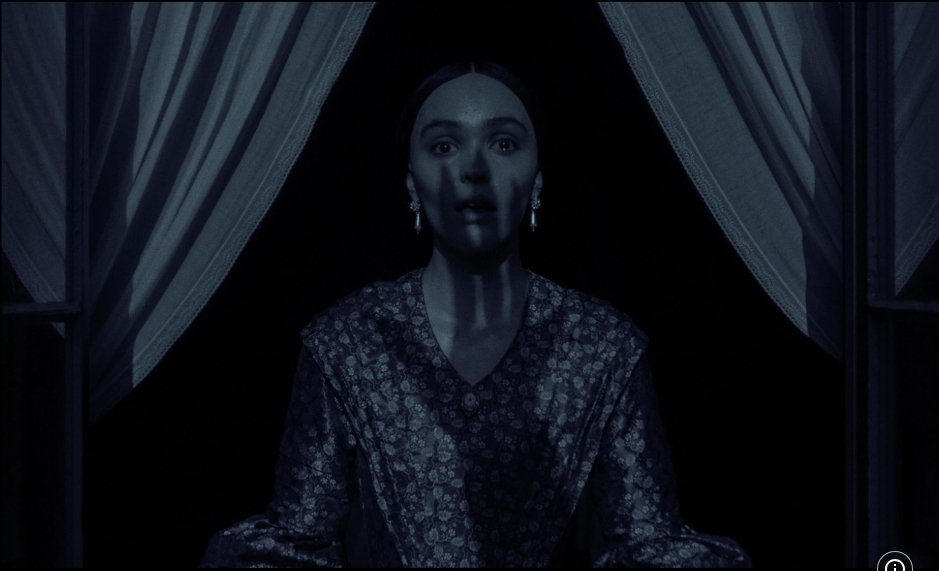
I have one more bone to pick. In this rendition, Eggers wrote Ellen Hutter to be a much more important character. Seeing as how she’s the one that “defeats” Noferatu I thought this was a cool decision with a lot of potential! It gave Lily Rose Depp a chance to show off her horror chops in these really intense character scenes, which were beautifully performed (if a little one note). My issue is the way he used her narratively. Here, Ellen Hutter is basically a vessel for Egger’s projected theme of evil, the question of whether it comes from within or beyond. It’s an interesting spin on the original, but the execution was laughably on the nose. She repeatedly asks the thematic question (at one point out loud to the audience), and it gets to be very tiring, especially given the issue I have with the act III pacing. By the end of the movie, I was tired of being told what to focus on.
Let me be clear: I think Eggers did a great job. He put unique twists on a classic work, and it was a really fun theater experience, but I find that I prefer his other work. He remains a master of *the vibe*, but his writing left me wanting. I give Nosferatwo a 3.5/5.
Avi & Vampires, coda
Maybe I’ll never be a die-hard fan of vampires, but watching the two Nosferatus taught me something. The appeal of vampires, at least to me, isn’t what they are – it’s how they’re used. When I create stories, there’s always a message that comes through, whether I like it or not. An unspoken piece of myself emerges, shaped by the themes I hold closest. Vampires, in particular, act as potent mirrors, reflecting the fears, desires, and truths of whoever wields them. For Murnau, he expressed existential dread of the unstoppable force that is death. For Eggers, he asked the question of where evil resides.3 I might not always connect with the vessel of the message, but I can’t deny it’s impact. And ultimately, that’s what matters most to me as a storyteller: taking the intangible, the things inside me that feel too big and messy, and giving it shape. If you’ve ever created something, you probably know this feeling. These storytellers used vampires to say what they needed to say, in their own way. Whether I’m fully turned (ha) or not, that’s something I’ll always respect.
What did you think of Egger’s Nosferatu? Have you seen the original, and if so, which one did you like more? Are you a big vampire fan? Shoot me suggestions for further reading! Thanks for reading and I’ll see you next week!
- I now appreciate Twilight for the trashfire masterpiece that it is, and I’ve been told by reliable sources that Buffy rocks and I hope to check that out one day. I’ve also seen What We Do in the Shadows, which I love, but it isn’t a particularly serious take, so I don’t count it. ↩︎
- When I realized Jojo’s Bizarre Adventure Part 1 and 3 are loosely based on Dracula, I had to physically get up and take several deep breaths. ↩︎
- For Stephanie Meyer, she just wanted to channel her horny, and I get that ↩︎
 Center of Gravity
Leave a comment