Blooming
Spring has always felt strange to me. As a kid, I felt that it lacked personality; it hardly had any holidays, the weather was in-between, and it felt like its only purpose was to separate winter and summer. I didn’t hold this belief for very long. In my short time on this earth, I’ve learned that Spring has a way of making things happen. Drama explodes, people change, the past and future shift. Spring doesn’t lack personality; it actually has a little too much of it. An empty calendar is actually a blessing—we need the time for everything to settle.
We’ll never untangle the seasonal forces at play, but that’s not the point. Spring isn’t meant to be understood. It’s meant to be felt. This year, I let the strangeness in. Five horror movies, five flavors of Spring. Here’s what I found.
You Won’t Be Alone (2022, Goran Stolevski)
A young witch in 19th century Macedonia explores life and love through her interactions with a village community.
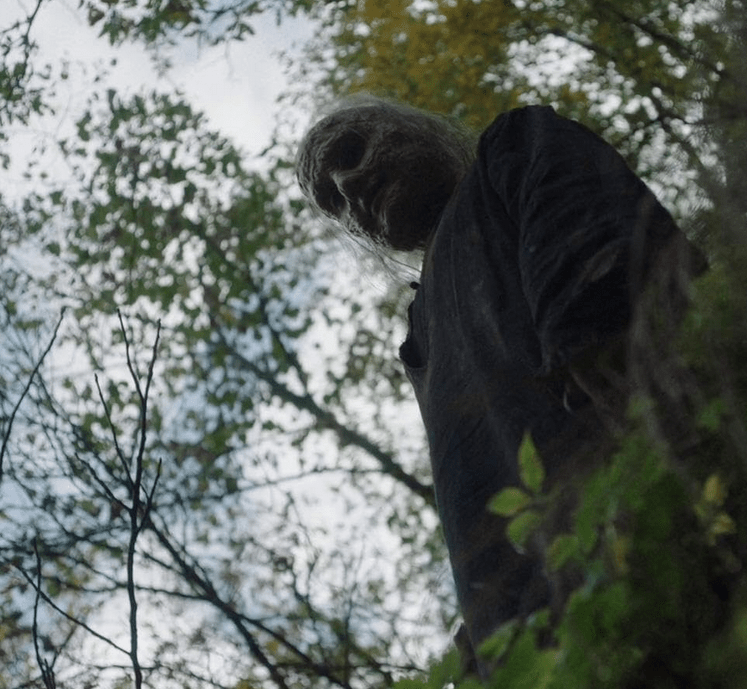
This was spring in its exploration of gender, parenthood, and the painful growth out of adolescence. Our main character shapeshifts, and so we see life through the community of womanhood, the security of manhood, the freedom of childhood, the beauty—and grief—of falling in love. The pastoral setting was especially effective at isolating those themes. It’s easy to wax poetic on life when you’re surrounded by babbling brooks, thatched huts, and rolling green hills.
This was less a story, more meditative voice-over set to vibe shots of nature. When it was good it was incredible; I cried at one point because I was so moved. And yet, it fell flat for the majority of its run time. The writing is a double-edged sword here—it’s clear Stolevski had a lot to say, but sometimes his voice came off as trite instead of profound. There were no big swings, only confident, sleepy ones. The worst part for me was the total lack of character development and narrative stakes; I was never worried or even curious about the characters. A horror movie doesn’t need to scare me—it just needs to make me care. And despite its beauty, this one didn’t. 3/5
The Wailing (2016, Na Hon-Jing)
A completely inept police officer investigates a disturbing chain of supernatural murders in rural Korea
This was spring in its depiction of evil as a creeping, unstoppable force, the aggressive energy of confusion, the fear of being consumed. Evil is most dangerous when it’s sown through paranoia and whispers. Nothing is certain, there is only the flailing grasp for security in the tales told by old crones and outcasts. The spring vibes were the best in this one: Constant rain, endless mountains, hot blood on hay. There were crunchy effects, mood-drenched sound design, and an exorcism sequence that truly took me out of my body. It was nice.
Unfortunately, it overstayed its welcome. While the ideas were compelling, the execution was totally scattered. This movie was all over the place man! It was like ten different horror genres in one, attempting to tackle witches, zombies, exorcisms, murder mystery, and everything in between. At 150 minutes, this movie was too damn long; it would have benefited from like an hour of cuts. Worse, it was really confusing! Clearly this was the intention; evil was characterized here as tricky, hidden, omnipresent. The issue is, they never resolved that feeling of tension, at least not in a way that someone of regular intelligence (me) would reasonably piece together on a first watch. And that’s just the thing—I don’t see myself watching this again on purpose. 3/5
The Substance (2024, Coralie Fargeat)
A celebrity past her prime finds a serum that grants her ideal beauty at a great price
This was spring in its obsession with beauty, the cost of blooming for too long. I think a lot about how the beauty of beauty is that it’s constantly changing. That’s the way of nature. Seasons give and take; beauty evolves from one ideal to the next. The Substance is a response to the ways we’ve corrupted that cycle, the impossibly strict beauty standards we measure women against. This movie is blunt and angry; it invites the audience to join in its rage.
Fargeat uses repetition to incredible effect. We’re flooded with a slew of images, alternating between the grotesque and the ideal: bare asses, rotting food, gleaming billboards, puckering wounds. Either way, everything is displayed in vibrant, aggressive colors, while the use of negative space and perspective stretch each scene into a nightmarish mockery of the real. This surreal quality extends into every aspect of the film. The performances are bizarre, the character writing is inane, the logic is warped—and yet, it all somehow fits. Like telepathy through immersion, Fargeat tells a strikingly precise message through a million broad strokes. You don’t flinch because it’s grotesque—you flinch because it’s uncomfortably real. 4.5/5
Color Out of Space (2019, Richard Stanley)
An eldritch asteroid crashes into the yard of an upstate farm. Chaos ensues.
Spring means growth and change, whether we like it or not. Color Out of Space highlights our helplessness against such forces, the simultaneous terror and bliss of accepting things beyond our control. I’ve always struggled with eldritch horror. At its worst it’s pointless, and at its best? It makes you question what the point is. Wordplay aside, I found a surprising coziness in the way the themes were presented; when I thought of it as a creature feature with a hint of philosophical spice, I enjoyed it a lot more.
This is a great popcorn movie! I actually enjoyed it more than The Wailing or You Won’t Be Alone; this one didn’t take itself nearly as seriously, and that worked in its favor. It’s decently paced, well written, and surprisingly gorgeous. I loved the vibrant magenta light as a returning indicator of horror and chaos to come. The performances were ridiculous—at first I hated it, until I remembered that they were all going insane. Fair play. It was nice to see a plot-relevant reason for Nicholas Cage to act the way he does. The body horror hit, but it would have hit harder if I hadn’t seen The Substance literally the day before. Hilarious that this was my second consecutive movie to feature bodies horrifically melding together. The climax is what really stuck with me: a vision sequence showing the true nature of reality, the incomprehensibility of which was so intense that it collapsed the entire property into ash. It was fucking sick; I might yet be sold on this whole eldritch horror thing. 3/5
Possession (1981, Andrzej Zulawski)
A married couple navigates the violent, supernatural fallout of their marriage, ruined by infidelity.
Spring evokes love, Posession shows its darkest sides. Neurotic, feverish, and (almost) unbearably bleak, this stab wound of a film explores the way we tear each other—and ourselves—apart in pursuit of lost love. At the center is violence: sometimes banal, often gleeful, never without purpose; blood is spilt not to cause harm but rather to express pain. As the characters shriek their way through the spiraling narrative, supernatural elements blend seamlessly into the nightmare. Any chance at redemption is doomed long before the credits roll.
Every element at play is working towards the same goal. The direction as a whole—movement, framing, lighting, and everything in between—serve the larger thematic ideas. You can feel dread in even the smallest details. To that end, the performances are particularly potent: Every line feels like a scab picked, an insult spat, a knife twisted. One scene haunts me even now: a 3-minute sequence where Isabella Adjani miscarries the devil’s child. Her physicality and intensity make for an excruciating watch; you’d think it would be over the top, but it lands with gnarly realism. That’s what makes Posession great: it tells a human story not in spite of its demons, but because of them. If love and hatred really are the same thing, this film doesn’t just show you why—it makes you feel it. 4/5
Rotting
With just over a month until Spring is officially over, I’m glad I took this time to explore the season in new light. I wouldn’t call the experience fun—my dreams got really weird, and I don’t know how healthy it is to witness that much bodily trauma in a week—but it was worth it. Spring is for growth, sure, but growth hurts. That’s what I understand better now. Before I know it, summer will be here—but the good can’t come without the change. It’ll be here when the time is right. For now? I’m glad to sit in the mess, to watch with intent while the flowers bloom and rot.
 Center of Gravity
Leave a comment