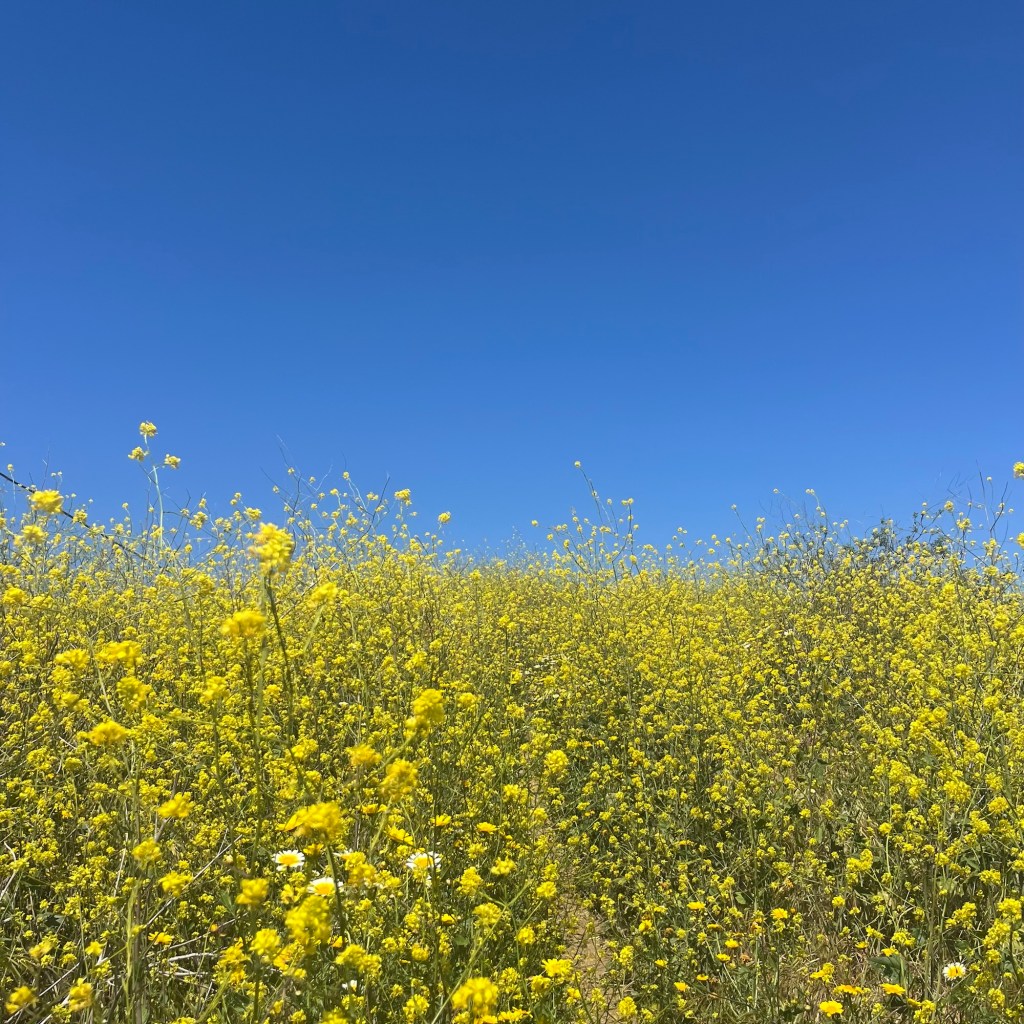
Somewhere, the world is on fire
I am not especially concerned with sustainability. Let me clarify—I care about the Earth and the environment, I care about microplastics in the ocean, I care about greenhouse gases and climate change. Of course I do. But I don’t care about them in the same way that I care about, say, my weekend plans or my next blog post. I know the world is dying, but it’s not top of the mind—more a stormy backdrop than a central concern. There’s so much to worry about already, it’s all I can do to focus on what’s right in front of me.
But that’s the problem, isn’t it? Sustainability efforts fail because the world is just too damn big. It’s hard to connect sustainable habits with the climate crisis, to imagine a single recycled water bottle doing anything for the already suffocated oceans. Overall? I’m feeling apathetic. Sure, I want to do the right thing, but I also don’t want to care more. It costs to care, it’s stressful as hell! Recently that internal conflict has been especially loud, and I figured that, with Spring in full bloom, it was the perfect time to listen. So, I did what I do best—I watched some movies about it. Here’s what I saw.
Clearcut (1991, Ryszard Bujagski)
“Someone needs to hurt for this”
A gray spring sky, a demolished forest, a frigid, choppy lake: this is the backdrop for the doomed legal battle between a native tribe and an invading logging company. With nothing left to lose, Arthur, a scorned native mercenary, kidnaps the case’s failed prosecution attorney and the logging company CEO. Retribution ensues. Clearcut is an exploration of performative liberalism weighed against reality; how hard should you fight the good fight? When does a cause become grounds for war? Is violence ever the answer? This film sublimates the diaphanous concept of justice into gritty consequence.
White men have the privilege of opinion; they can choose to feel with the guarantee of safety. Arthur yanks them—literally—from their perch and forces them to face his own bitter reality. You can feel the anger in the writing; in the way the film is sequenced. At one point he “debarks” the CEO’s leg (it’s exactly what it sounds like), a scene that makes for a fun fever pitch that I’ll remember for a while. As he drags his captives through the wilderness, it becomes clear that there is no winning for anyone here—only blood to be shed in the name of mother nature. The display of emotion is ambitious, but overall, the film lacks movement. Anger should carry momentum; to me, this film dragged. Bujagski asked the same questions over and over again, scene after scene—a bold choice to make when the plot is paper-thin. To many, this is a meditative and artful slow-burn thriller. To me, it’s a strangled yell that gets lost in the trees. 2.5/5
Embrace of the Serpent (2015, Ciro Guerra)
“No me gusta el dinero, el sabor es horrible”
I wish this film took itself a little less seriously, which might sound rash since it was originally made to address colonialism and violence against natives, but that’s just the thing—its a movie. In the way that no anti-war movie can truly be anti-war, I don’t think any anti-colonist movie can truly be anti-colonist. Dressing up the thing romanticizes the thing. That said, I’m much more interested in what the movie says about the nature of time than the broad-stroke moral targets that Guerra tries (and largely fails) to hit.
The film follows Amazonian native Karamakate on two journeys to assist explorers in finding a sacred hallucinogenic flower, once as a young man, once in old age. Across generations, he changes completely, but the forest remains the same. So too does the desire to access that altered state of consciousness, available only deep in the forest. The flower isn’t just a flower: It’s a symbol of our longing to dream, to transcend. In any time, in any place, this is our goal. And yet, such an achievement is made not through the consumption of the plant alone, but through the passage of time, maturity of belief, and exposure to nature in its primordial glory. On his first expedition, Karamakate burns the flower—an act of fury, defiance, preservation. On his second, he offers it with reverence and disappears into the mountains without a word. Not out of surrender, but because he no longer needs to fight. The forest has already won. 3/5
Princess Mononoke (1997, Hiyao Miyazaki)
“So you say you’re under a curse? So what? So’s the whole damn world.”
Every time I watch a Miyazaki movie, I’m in disbelief at how he balances beauty, substance, and clarity. Is this movie a visual masterpiece? A rousing call to action? An epic story for the ages? It’s all of the above and more. At the center are three characters in conflict. Princess Mononoke is a human raised by wolves who hopes to defend the forest, even if it means massacring the humans. Lady Eboshi is the leader of a growing town who hopes to demolish the forest to provide for her people. Ashitaka is an outsider hoping to bring the factions together, ending the bloodshed for good. This combination makes for a nuclear character study, the shadows of which paint a larger message about how humans interact with the natural world.
I’m realizing it’s impossible to tell a story about environmental destruction without violence. However, where the other movies wielded violence as spectacle, Princess Mononoke uses it like a warning sign. Don’t get me wrong, it’s still brutal—I did not expect so many severed limbs from a Miyazaki movie—but it’s always done with meaning. Ashitaka understands that hatred corrupts, that bloodshed for any reason is a curse to the victim and perpetrator alike. I’ll admit it’s disorienting—trite, even—that the takeaway is “we should all just get along”, but Miyazaki punctuates it with nuance. He never waffles, showing that peace, too, comes with a grave cost. Honestly, I should’ve just watched three Ghibli movies. 4.5/5
Conclusion
As I wrote this piece, there was a good hour or two where I tried so hard to find a throughline between the three movies. I looked for thematic resonance, returning motifs, maybe a shared message, but no. Each one had something completely different to say about the natural world. Clearcut saw nature as something to avenge, land as a birthright. Embrace of the Serpent saw nature as a backdrop for change, a catalyst for growth. Princess Mononoke saw nature and humans as parts of a shared fabric, to hurt one is to hurt the other. I kept reaching for a spark—something to tell me now, you understand. You have solved… sustainability. I laugh at my naivete.
Yeah, I’ll say it. Movies alone can’t solve the environmental crisis. I’m realizing that the relationship between man and nature is a deeply personal thing. As such, these pieces were, more than anything else, reflections of their creators’ thoughts on the natural world. They felt more like post-facto expressions than instructive environmental ethics, which, I guess I should’ve expected. Art doesn’t tell you to do something. It just awakens what’s already there. As far as what this means for me? I still don’t know exactly, but I know now that I won’t find the answer watching movies about the environment while I eat my processed food in my plastic gamer chair on my dual monitors while the air conditioner goes full blast. Maybe, it starts outside. The storm’s still there, but for now, I’m gonna go touch some grass.
 Center of Gravity
Leave a comment