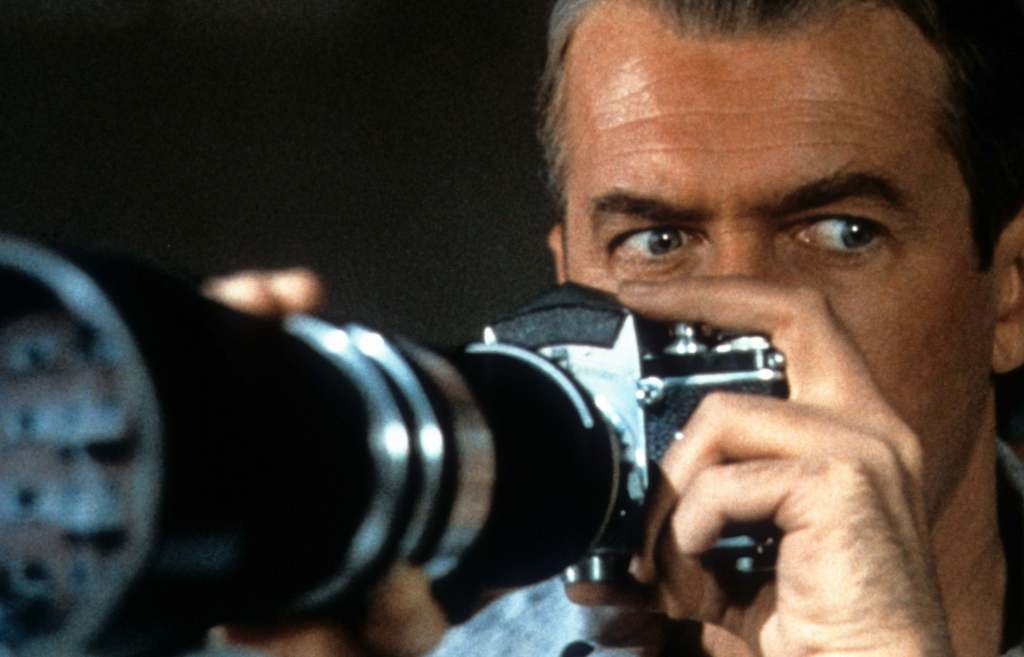
a murderous trio!
As a movie nerd, Hitchcock always loomed in my watch-later list like required reading—dense, historic, maybe a little dry. To be fair, I’ve enjoyed most of the “classics” that I’ve tried (Casablanca and Citizen Kane are both five stars), but I was still skeptical that I’d have a good time. I’m a huge fan of modern horror and suspense, and I had this bias that older horror would be less polished, less nuanced, maybe less interesting overall. Still, I had to get to it at some point. With an open weekend and a trusty watch partner (hi Zoe), I dove into Hitchcock’s three most popular films.
Vertigo (1958)
San Francisco. A detective with a crippling fear of heights falls in love with the wrong woman.
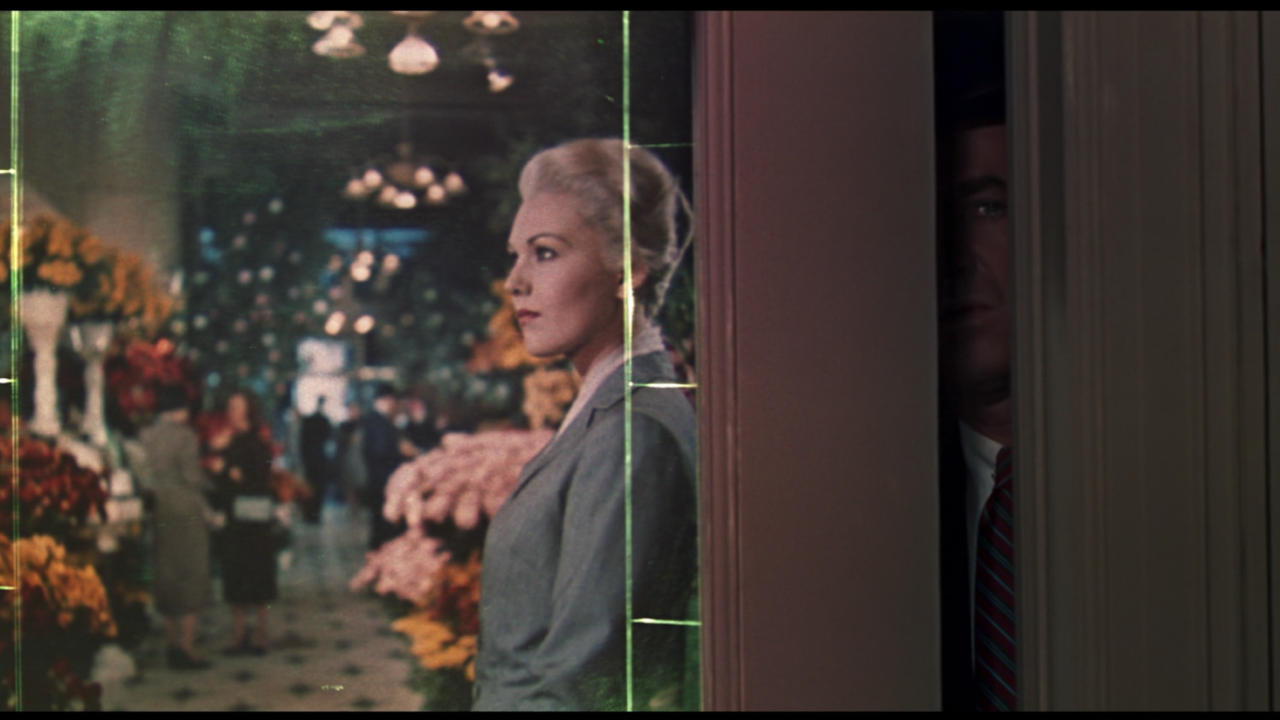
Vertigo spirals slowly. It moves with leisure, every shot steeped in hazy Californian sun. Under that sense of ease, there’s something darker. The peace is deliberate and sharp; it’s a held breath, not a sigh of relief. My favorite thing about Hitchcock’s style is his unique perspective. He doesn’t direct to familiarity; he has a vision and forces you into it for all its beauty and horror. San Francisco, through his eyes, is a city at once crowded and desolate, beautiful and morose. His ability to bring out that tension is key: Each scene is a step on a rickety staircase, spiraling ever upwards–You don’t realize how far you’ve gone until you look down. The fall is inevitable.
Hitchcock is tricky. He offers a romance so cloying and rushed that I figured it must be a product of its time: sweeping shots of the skyline, stolen kisses on the shore, the sweetest soundtrack you’ll ever hear—all without developing the actual relationship at all. Old-style Hollywood through and through. If it had stopped there I would’ve been satisfied—it was done well enough; I was having a fine time. But then, the rug pull. Act 3 prickles with a taunting self-awareness, dragging you from the shallows into abyssal, psychological horror. With his characters cornered, Hitchcock cross-examines them—and the audience—with surgical cruelty. How quickly can you fall in love? What if you found it in the wrong place? Then, what if you lost it? What would you do to get it back? Who would you deceive? Your partner? Yourself? The spiral gets tighter and tighter until it strangles itself in a nauseating, decisive finale that haunts me even now. 4.5/5
Rear Window (1954)
New York. A man at a crossroads becomes obsessed with window watching.
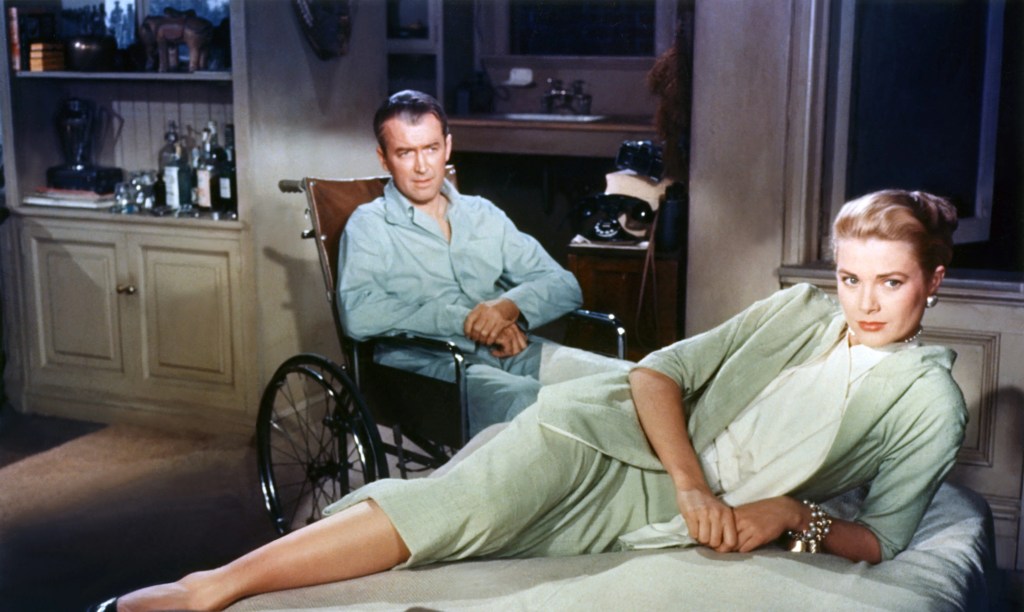
I went into Rear Window expecting a straightforward mystery/thriller. What I got was painfully relevant commentary on voyeurism and agency. Our leading man, recently recovering from a broken leg, is committed to weeks in his apartment with nothing but time and a pair of binoculars. As such, 90% of the shots are from his point of view; a gimmick that would have fallen apart in less capable hands (breaking news: Hitchcock is good with a camera). The colors, body-acting, lighting, and camera movement breathe life into each vignette. Even across the plaza they feel real, but the distance creates detachment. He’s safe from his watching perch—at least at the start.
Rear Window opens light and playful, voyeurism as harmless mischief. The characters regard the window people with nothing more than passing curiosity. But then, much like with Vertigo, Act 2 turns the scenario on its head. The characters plunge into a rapidly deepening investment, so much so that they get involved, risking their lives—and the lives of those they love. This tonal shift mirrored my own engagement, which strengthened my connection to the characters and made for a sickeningly personal watching experience. Such is the beauty of Rear Window: Hitchcock yanks you from the safety of your chair, forcing you to consider what it means to watch. For that reason, the film is arguably more pertinent now than when it was released. Rear Window asks that, in a world of infinite windows, we choose carefully what we watch, how we engage, and what we decide is real. 4.5/5
Psycho (1960)
The middle of nowhere. A woman on the run. A man with a knife.
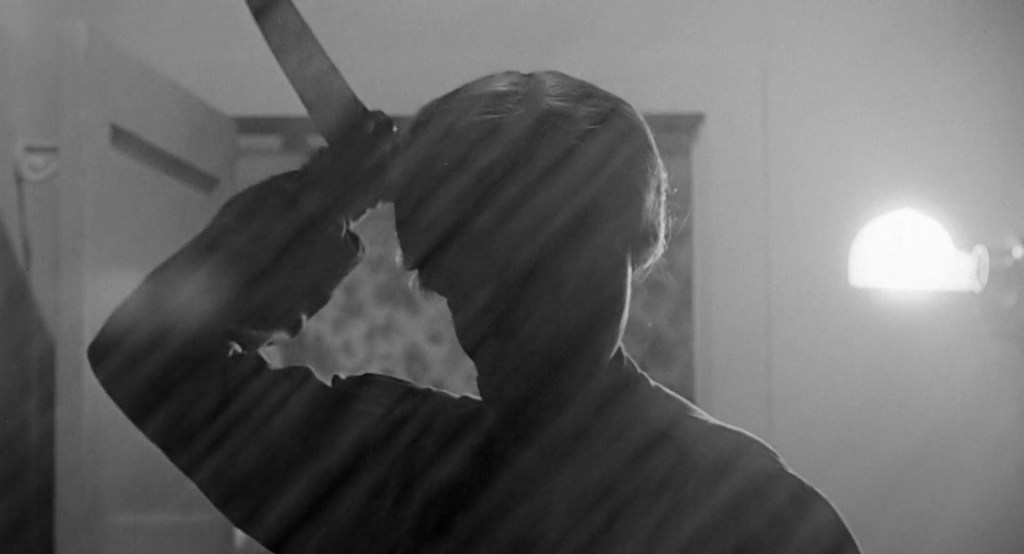
On paper, Psycho is a standard slasher. We’ve seen it before. A crazed killer haunted by childhood trauma picks off victims in an eerie cabin/forest/mansion/etc. Hitchcock doesn’t change the formula but does something arguably more important: he shows that horror can be striking, beautiful even, when it’s allowed to just be. I’m a huge fan of slashers but I’ll be the first to say that most of them are only okay; fine for a popcorn night with friends, forgotten by the end of the week. But Psycho? It has staying power. It’s all in the execution.
Hitchcock uses perspective, shadows, and shapes, transforming senseless violence into hypnosis. A knife held aloft, an open-mouthed shriek, blood circling the drain—these heuristics evoke a razor-sharp feeling of terror. In this way, Psycho is just as interrogative as Rear Window or Vertigo, asking the audience why such violence feels so familiar, why we can’t look away. It’s said that Psycho imbued violence into the American subconscious. I argue that it’s always been there; Hitchcock just gave us a sturdy foothold, something pulpy and real to point to. Style vs substance is a false dichotomy; in Psycho, style is substance. Even so, for my part, Psycho is less a watershed cultural masterpiece (which, to be clear, it is) and more just a darn good time. For all its historical significance, it felt like Hitchcock just got behind the camera and picked what looked cool. This is my highest praise—horror should be fun. Psycho passes with full marks. 4.5/5
closing thoughts
Watching a Hitchcock movie is like playing with a well-designed puzzle box. Even if you don’t “solve” it, you can still have fun with it, turn it over in your hands, appreciate the craftsmanship and beauty. But if you keep at it? You realize just how gnarly and complex it really is. I think Hitchcock used movies as an outlet, a way to sort it all out. I get it. I’m not saying I’m on his level by any stretch, but the way he used his medium to say something real really resonated with me.
Hitchcock’s work is timeless because it’s true. Sure, his movies are polished to hell and the technical work is fantastic in any decade (which did surprise me), but what’s truly impressive is his clarity of thought. The man is obsessive. You can feel a sort of clawing curiosity in everything he does, a manic frustration in the way he turns his psychological questions onto the audience. It’s horrifying and incredible to witness, but that tension—that dogged pursuit of truth through creation—is what makes a classic. I’m a little burnt out on Hitchcock for now, but that familiar feeling in his work scratches an itch I didn’t know was there before. I know I’ll be back soon.
 Center of Gravity
Leave a comment